Prehistoric Cryptofiction
Posted by: Loren Coleman on August 18th, 2007
Walter Williams* in his Prehistoric Pulp blog’s essay, “Raising the Dead: Bringing back extinct animals in fiction,” has given us a trek through what the blogger calls “paleontological fiction.” Some of us here might view what he overviews as a form of “cryptofiction.” No matter what you call it, his exercise is fun reading.
In its essence, Williams shares a collection of online reviews and thoughts about these books. At its core, however, it’s a fan survey that reads with undercurrents of enjoyment and passion.
Go to the link itself (given above) to fully digest where these are taking you, but, in the meantime, here are a few of my favorite passages:
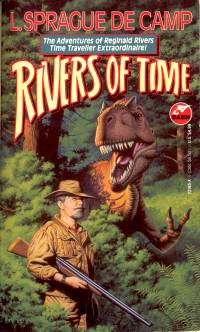
Readers must expect to suspend their disbelief when delving into any science fiction story about extinct creatures, but the fact remains that the more plausible the scenario for bringing back the animals, the more acceptance a work will receive from the public. Sir Arthur Conan Doyle penned The Lost World at a time when large regions of globe were still unexplored and the prospect of finding living fossils in the distant lands seemed possible, if highly unlikely. Jurassic Park by Michael Crichton played on fears of genetic engineering and was based on a premise that a few scientists said could become a reality. Even time travel, which almost certainly is not possible, has been used so much in science fiction that most people will accept it without asking too many questions about how it works.
The essayist has organized the piece around eight plot devices and goes on this safari with us, using those as his sideposts. I won’t keep to that track, as you can use him as your guide there. I want to stop along the way, and examine some of the deeper points that caught my attention.
The Lone Survivor
An individual creature or small group of the same species survives into modern times in this scenario. This is the realm of cryptozoology, the pseudoscience concerning the search for unknown animals and living fossils, such as Bigfoot, the Loch Ness Monster and the Yeti.
Prehistoric survivors are usually hidden somewhere inaccessible to man, like the brontosaurs deep in the Congo jungle in the movie Baby, Secret of the Lost Legend. The most memorable tale to use this plot device is Ray Bradbury’s short story “The Fog Horn”, in which the horn of a lighthouse summons an ancient and very lonely reptile from the depths of the ocean.
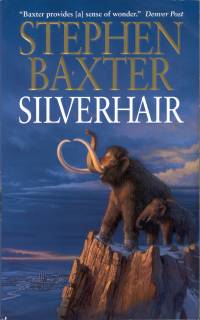
Stephen Baxter’s Silverhair is about a small herd of mammoths that still lives on an isolated arctic island. A wealthy Arabic family has been gathering prehistoric survivors from all over the globe for centuries in Bestiary by Robert Masello, a thriller set in modern-day Los Angeles.
The expansive and largely unexplored oceans provide plenty of territory for prehistoric animals to hide in. Both Meg and its sequels by Steven Alten and Extinct by Charles Wilson are about the survival of the super-shark Megalodon.
Of course, I shall not ignore that “cryptozoology” and “pseudoscience” shouldn’t be used in the same sentence. I understand what he’s trying to say here but it still feels like fingernails sloooowwwwly being pulled across a chalkboard to read that one sentence. Hey, Mr. Williams, it’s not nice to call “cryptozoology,” a “pseudoscience.”
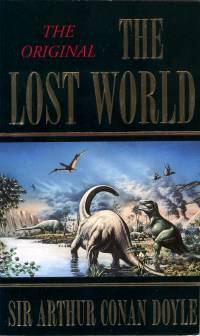
The most famous example of this device is the book that gives it its name, The Lost World by Sir Arthur Conan Doyle. In it, British explorers discover a South American plateau populated by dinosaurs and ape men. A lost world is different from the previous scenario in that an entire ecosystem survives hidden and unchanged, although animals from different time periods are usually thrown into the same setting.
This scenario was first used by Jules Verne in 1864 with the publication of Journey to the Center of the Earth, in which the heroes discover a giant cavern populated with extinct creatures. It became a staple of early 20th century pulp writers such as Edgar Rice Burroughs in his The Land That Time Forgot trilogy, set on a lost continent, and his Pellucidar series, set inside a hollow earth.
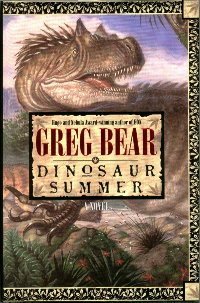
Indeed, it was Doyle’s The Lost World that first involved Bernard Heuvelmans in this entire field. It is a book that serves as an apex of the genre.
You’ve seen Jurassic Park, right?
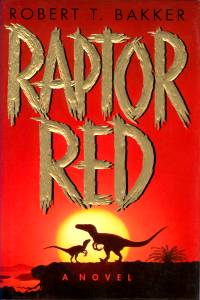
Then you know that in this case scientists find ancient DNA and resurrect dinosaurs using genetic engineering. It should be pointed out that Michael Crichton wasn’t the first use this device. Harry Adam Knight — a pen name for B-movie historian John Brosnan — unleashed genetically engineered dinosaurs on an unsuspecting British public in his 1984 novel Carnosaur, which hit bookstores six years before Jurassic Park. Piers Anthony resurrects a Baluchitherium, the largest land-dwelling mammal ever to have lived, in Balook.
Credit goes where credit is due in this essay. I like that.
A Different Flesh by Harry Turtledove depicts a world where Homo erectus rather than modern humans populated the Americas, allowing Ice Age mammals such as saber-tooth cats to survive into historic times. A group of teens finds a cave leading to a world where humans never evolved and Ice Age animals still roam in Steven Gould’s Wildside.
Wiiliams’s blog, Prehistoric Pulp, and this essay especially, are worth your time, if you enjoy these kinds of cryptofiction reviews.
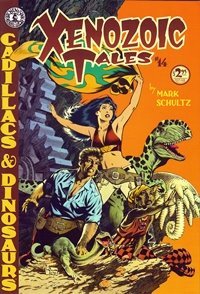
[*Walter Williams, not to be confused with 1. the science fiction author, 2. the conservative talk show host, 3. the basketball player, or 4. the creator of saturday night live’s Mr. Bill.]
 About Loren Coleman
Loren Coleman is one of the world’s leading cryptozoologists, some say “the” leading living cryptozoologist. Certainly, he is acknowledged as the current living American researcher and writer who has most popularized cryptozoology in the late 20th and early 21st centuries.
Starting his fieldwork and investigations in 1960, after traveling and trekking extensively in pursuit of cryptozoological mysteries, Coleman began writing to share his experiences in 1969. An honorary member of Ivan T. Sanderson’s Society for the Investigation of the Unexplained in the 1970s, Coleman has been bestowed with similar honorary memberships of the North Idaho College Cryptozoology Club in 1983, and in subsequent years, that of the British Columbia Scientific Cryptozoology Club, CryptoSafari International, and other international organizations. He was also a Life Member and Benefactor of the International Society of Cryptozoology (now-defunct).
Loren Coleman’s daily blog, as a member of the Cryptomundo Team, served as an ongoing avenue of communication for the ever-growing body of cryptozoo news from 2005 through 2013. He returned as an infrequent contributor beginning Halloween week of 2015.
Coleman is the founder in 2003, and current director of the International Cryptozoology Museum in Portland, Maine.