Charles Fort and Cryptozoology
Posted by: Loren Coleman on April 3rd, 2011
With Pat Spain, the host of the National Geographic series “Beast Hunter,” mentioning that his great uncle is Charles Fort, this topic seemed worthy of revisiting.
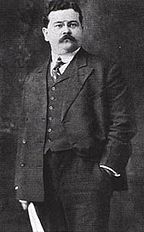
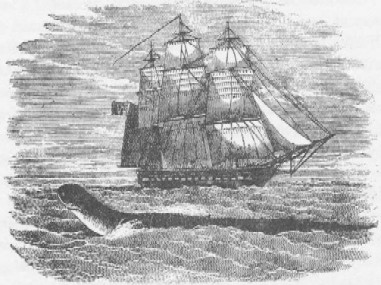
Charles Fort is best known for his four books on unexplained phenomena. (Fort’s death anniversary is this coming May 3rd, but his legacy lives on.) His first book was entitled The Book of the Damned, and by the “damned,” Fort meant all that was excluded by Science. One subject that caught his interest was reports of large animals that the scientists of history and his day said could not exist. In Lo!, Fort discussed Sea Serpents, but only in passing, for he wrote: “But I am avoiding stories of traditional serpentine monsters of the sea. One reason is that collections of these stories are easily available.”
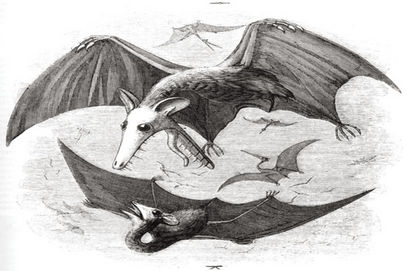
Fort turned his attention to examinations of more unique creatures, such as the Jersey Devil (a naturalistic but demonic beast reported from 19th century New Jersey). Fort examined sightings of large winged creatures in Chile and great antlered animals seen in New Zealand. Fort dealt with Lake Monsters in Argentina and South Africa. He was indeed Ivan T. Sanderson’s, and mine, and many later cryptozoologists’ inspiration because of his intriguing framing of the whole problem and his complete data collection, with a serious but light hand.
After discussing accounts of a thirty-foot animal off Australia, Fort wrote, in his unique challenging and humorous style: “I don’t know what will be thought of zoologists of Melbourne, but whatever will be thought of me, can’t be altogether focussed upon me, because there were scientists in Melbourne who were as enlightened as I am, or as preposterous and sensational as I am. Officials of the Melbourne Zoological Gardens thought that, whether this story was nonsense or not, it should be looked into.”
Charles Fort detailed the “blonde beast of Patagonia,” which was “supposed to be a huge ground sloth,” an unknown animal that seekers from Bernard Heuvelmans to Ivan T. Sanderson, from naturalist David Oren to artists Alexis Rockman, Mark Dion, and Bob Braine would chronicle in print and paintings.
Fort was happy to understand that he did not realize the number of unknown animals out there. Or as he put it in the midst of his discussion of such early cryptozoology: “So, like everybody else, I don’t know what to think, but, rather uncommonly, I know that.” And we must not forget this classic quotation of his: “When we come upon assurances that a mystery has been solved, we go on investigating.” If Sanderson and Heuvelmans are the fathers of cryptozoology, then surely Fort must be the midwife.
The above is a sample of commentary, mostly from the book, Cryptozoology: Out of Time Space Place, published in September 2006, in conjunction with the exhibition of the same name that opened on June 24, 2006. Copyright Loren Coleman 2006.
BTW, I am not interested in the paranormal, supernatural, and parapsychology, per se, versus the concrete nature of zoology, anthropology, and biology, as revealed in cryptozoology. For those that know Fortean phenomena, you understand that Fort wasn’t interested in “ghosts” either, but was intrigued by “poltergeists.” The gap between the two is huge.
The difference is enormous also between “ghost cats” and “Mystery Felines,” for example, although people may be confused by my coining of phrases like “Phantom Panthers” and the “Dover Demon” to describe physical animals. I like names that add mystery and alliteration to the field, because they generally reflect how people “feel” about what they are seeing.
 About Loren Coleman
Loren Coleman is one of the world’s leading cryptozoologists, some say “the” leading living cryptozoologist. Certainly, he is acknowledged as the current living American researcher and writer who has most popularized cryptozoology in the late 20th and early 21st centuries.
Starting his fieldwork and investigations in 1960, after traveling and trekking extensively in pursuit of cryptozoological mysteries, Coleman began writing to share his experiences in 1969. An honorary member of Ivan T. Sanderson’s Society for the Investigation of the Unexplained in the 1970s, Coleman has been bestowed with similar honorary memberships of the North Idaho College Cryptozoology Club in 1983, and in subsequent years, that of the British Columbia Scientific Cryptozoology Club, CryptoSafari International, and other international organizations. He was also a Life Member and Benefactor of the International Society of Cryptozoology (now-defunct).
Loren Coleman’s daily blog, as a member of the Cryptomundo Team, served as an ongoing avenue of communication for the ever-growing body of cryptozoo news from 2005 through 2013. He returned as an infrequent contributor beginning Halloween week of 2015.
Coleman is the founder in 2003, and current director of the International Cryptozoology Museum in Portland, Maine.







Actually, I consider Charles Fort, Ivan T. Sanderson, and Bernard Heuvelmans to be the Fathers of Cryptozoology.