
New Species: Three Salamanders and Two Frogs
Posted by: Loren Coleman on January 6th, 2008
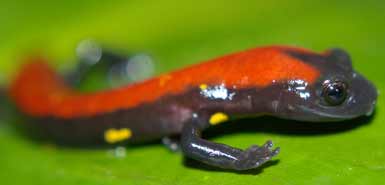
It looks like 2008 will have as many new species finds as other recent years.
The Darwin Institute has announced that eleven new species of animals and plants have been discovered in Costa Rica.
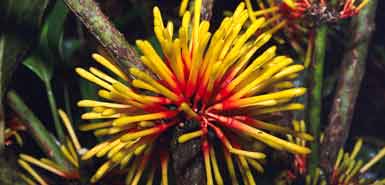
Two frogs and six plant species, including a mistletoe with a “spectacular flower,” were among the finds never before seen by scientists.
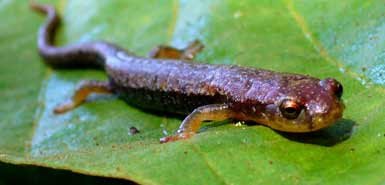
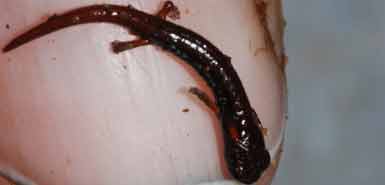
The three salamanders, one of them a dwarf species little more than an inch long, were discovered after zoologists spent nights stripping tree trunks of moss and other vegetation in the cloud forest in La Amistad National Park in Costa Rica.
Finds
Salamanders: Two new Bolitoglossa and a Mototriton (dwarf salamander)
Frogs: Two new Eleuthero-dactyl I
Plants: Pilea, Stenospermation, Oreopanax, Psitticanthus, Cuatresia and Cestrum
 About Loren Coleman
Loren Coleman is one of the world’s leading cryptozoologists, some say “the” leading living cryptozoologist. Certainly, he is acknowledged as the current living American researcher and writer who has most popularized cryptozoology in the late 20th and early 21st centuries.
Starting his fieldwork and investigations in 1960, after traveling and trekking extensively in pursuit of cryptozoological mysteries, Coleman began writing to share his experiences in 1969. An honorary member of Ivan T. Sanderson’s Society for the Investigation of the Unexplained in the 1970s, Coleman has been bestowed with similar honorary memberships of the North Idaho College Cryptozoology Club in 1983, and in subsequent years, that of the British Columbia Scientific Cryptozoology Club, CryptoSafari International, and other international organizations. He was also a Life Member and Benefactor of the International Society of Cryptozoology (now-defunct).
Loren Coleman’s daily blog, as a member of the Cryptomundo Team, served as an ongoing avenue of communication for the ever-growing body of cryptozoo news from 2005 through 2013. He returned as an infrequent contributor beginning Halloween week of 2015.
Coleman is the founder in 2003, and current director of the International Cryptozoology Museum in Portland, Maine.











Great news, more on the way I hope.
Cryptomundo rocks!!!
Mistletoe was my favorite.
I believe most people have no idea new plants and animals are still being discovered.
I agree that there are many plant and animal species yet to be discovered.
absolutely beautiful!! Mistletoe shouldn’t look so pretty, it’s just wrong. Costa Rica, that right there proves that undiscovered doesn’t happen just in remote places where either the terrain is tough or the government won’t allow anyone in. People just needs to wake up and say,”Hey, how long has it been…?” Hope to see more, maybe something bigger?!
Since amphibian species around the world are disappearing at such an alarming rate, the discovery of new species is wonderful news indeed.
Kittenz points out an interesting juxtaposition there. I’ve heard that many of the new species being discovered are in fact hidden in plain sight and are revealed to be new species with the use of molecular biology, whereas the ones that are being lost, could just as well represent others that like wise would be in plain sight if they were to be examined in the detail they deserve. Alas, once gone the same thread cannot be rewoven exactly as it was.
Ideally, sane habitat preservation, conservation and restoration, including the re-wilding of pleistocene North America that benefits those who live around it in the practical as well as cultural sense would be the preferred way. Unfortunately, it’s not on the ballot and I check every time.