
“Hidden” Frog Found
Posted by: Loren Coleman on February 5th, 2007
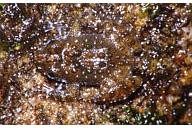
Talk about your “hidden animal.” Now we know why they call cryptozoology the study of “hidden animals.” (It’s a joke, herpers.)
Above is shown one of the rare members of the Nannophrys frogs, from Sri Lanka (formerly known as Ceylon, which frequently remains as a historical artifact in their scientific names).
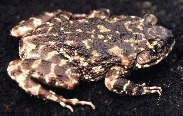
Craig Heinselman has posted at Strange Ark that there has been a new species of frog (shown below) described from Sri Lanka. It is a new species of endemic frog belonging to the genus Nannophrys.
Heinselman notes: “In 2004 and 2005, nine specimens of the amphibian were collected. These came from Kokagala, Padiyatalawa of the Ampara District and from Yakunattela of the Bibile of the Monaragala District in Uva province.”
 About Loren Coleman
Loren Coleman is one of the world’s leading cryptozoologists, some say “the” leading living cryptozoologist. Certainly, he is acknowledged as the current living American researcher and writer who has most popularized cryptozoology in the late 20th and early 21st centuries.
Starting his fieldwork and investigations in 1960, after traveling and trekking extensively in pursuit of cryptozoological mysteries, Coleman began writing to share his experiences in 1969. An honorary member of Ivan T. Sanderson’s Society for the Investigation of the Unexplained in the 1970s, Coleman has been bestowed with similar honorary memberships of the North Idaho College Cryptozoology Club in 1983, and in subsequent years, that of the British Columbia Scientific Cryptozoology Club, CryptoSafari International, and other international organizations. He was also a Life Member and Benefactor of the International Society of Cryptozoology (now-defunct).
Loren Coleman’s daily blog, as a member of the Cryptomundo Team, served as an ongoing avenue of communication for the ever-growing body of cryptozoo news from 2005 through 2013. He returned as an infrequent contributor beginning Halloween week of 2015.
Coleman is the founder in 2003, and current director of the International Cryptozoology Museum in Portland, Maine.











Considering the top photo it’s not surprising they stayed undiscovered for so long.
Wish all the kinds of frogs we had around here when I was a kid could still be found but development has made that impossible.
It’s a beautiful specimen… I think! 😀 (… if I could only see it better!)
Most excellent!
Are they poisonous?
Environmental change, pollution, and human activities have not been kind to amphibians. As far as a precursor to future effects of global warming and pollution, I’ve heard them compared to the canaries miners used to carry into mines to detect poisonous gas. With all of the frogs that are dying off in the world, it is very good to see some actually being found.